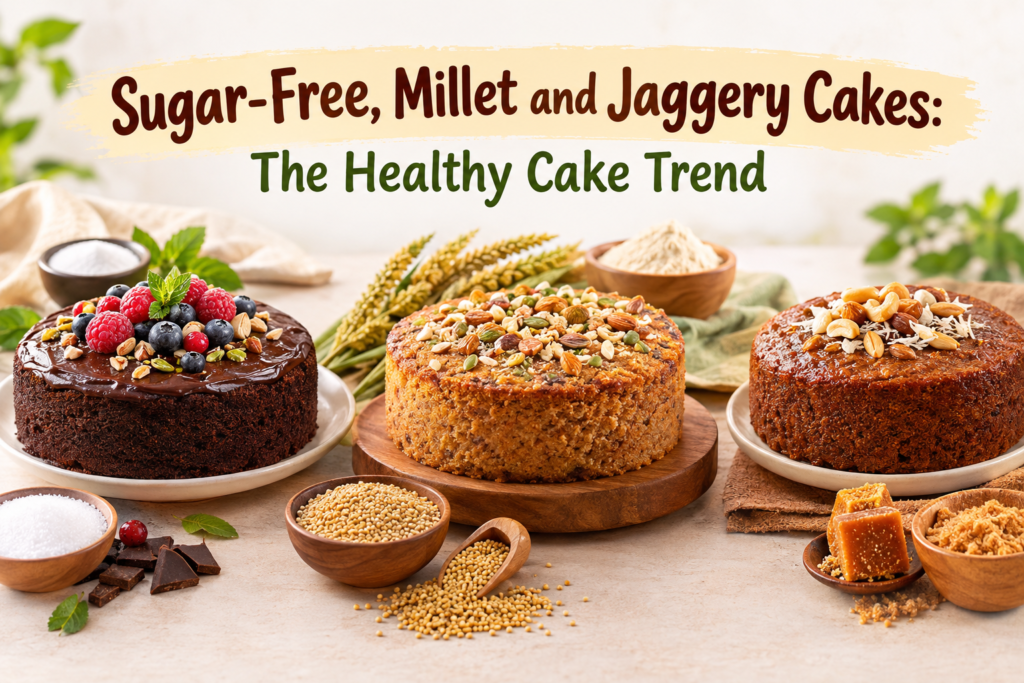
More Indian customers now ask a simple question before ordering a cake: “Is there a healthier option?” Some want to cut refined sugar, some want to avoid maida, and some are buying for elders or family members who watch their sugar intake. Bakeries have responded with sugar-free, millet and jaggery cakes. This guide explains what each one is, how it tastes, and what to check before you order.
1. Sugar-Free Cakes
What they are: Cakes made without regular white sugar. Sweetness comes from alternatives such as stevia, erythritol, monk fruit, or sugar substitutes, and sometimes from dates or fruit.
What to know:
- “Sugar-free” does not automatically mean “carb-free” or “calorie-free.” The flour, fruit, and other ingredients still contribute.
- Some sweeteners can leave an aftertaste, or cause stomach discomfort in large amounts.
- Texture may be slightly denser or drier, since sugar helps cakes stay soft and moist.
Good flavours to try: Chocolate, coffee, vanilla with fruit, and nut-based cakes tend to work well, because strong flavours hide any aftertaste.
Best for: People who want to reduce sugar, and families celebrating with someone who limits sugar.
Read More: Biscoff, Pistachio and Dubai-Chocolate-Style Cakes: Flavours Customers Are Asking For
2. Millet Cakes
What they are: Cakes made partly or fully with millet flours such as ragi (finger millet), jowar (sorghum), bajra (pearl millet) or foxtail millet, instead of, or along with, refined flour (maida).
Why people like them:
- Millets are traditional Indian grains and are generally higher in fibre than refined flour.
- They are gluten-free by nature, though a cake may still contain wheat if it is blended, so check the recipe.
- They give a nutty, earthy flavour.
Popular forms:
- Ragi chocolate cake
- Ragi and jaggery cake
- Jowar or oats-based banana cake
- Millet muffins and cupcakes
What to know: Millet cakes are usually denser and more crumbly than regular sponge. A blend of millet and wheat flour often gives a softer result.
Best for: Health-conscious customers, kids’ snack-time cakes, and people looking for more fibre.
3. Jaggery Cakes
What they are: Cakes sweetened with jaggery (gud) instead of refined sugar. Jaggery gives a deep caramel-like, slightly molasses flavour and a darker colour.
Why people like them:
- It is a familiar, traditional sweetener.
- The flavour pairs well with ragi, wheat, dates, coconut, banana and spices.
- It feels more natural and homely to many customers.
What to know: Jaggery is still a form of sugar. It contains small amounts of minerals, but the amounts in a slice of cake are small, and it affects blood sugar much like sugar does. So a jaggery cake is a “less refined” choice, not a “sugar-free” one.
Best for: Festive occasions, winter bakes, and customers who prefer traditional ingredients.
Quick Comparison
Type | Sweetener | Flour | Texture | Good for |
Sugar-free | Stevia, erythritol, etc. | Usually maida or wheat | Slightly denser | Reducing sugar |
Millet | Varies | Ragi, jowar, bajra | Dense, crumbly | More fibre, gluten-free options |
Jaggery | Jaggery | Wheat or millet | Moist, caramel-like | Traditional, less refined |
An Honest Note on "Healthy" Cakes
A cake is still a treat. These options can reduce refined sugar or refined flour, but they are not health foods, and portion size still matters. For people with diabetes, a doctor or dietitian should guide the choice, since “sugar-free” and “jaggery” cakes can still raise blood sugar. Anyone with allergies or coeliac disease should check ingredients and ask about cross-contamination in the kitchen.
Tips for Ordering
- Ask what the sweetener is. “Sugar-free” can mean stevia, erythritol, dates or something else.
- Ask about the flour. A “millet cake” may be 100% millet or a blend with wheat or maida.
- Ask about the frosting. A sugar-free sponge with regular cream or sweetened frosting defeats the purpose.
- Choose simple designs. Fresh fruit, nuts and light cream suit these cakes better than heavy fondant.
- Order ahead. Specialty flours and sweeteners may need advance notice.
- Store properly. These cakes can dry out faster, so keep them covered and follow your bakery’s storage advice.
Read More: Christmas Plum Cake and Festive Cake Trends in India
Conclusion
Sugar-free, millet and jaggery cakes give customers more choice, whether they want to cut refined sugar, add more fibre or return to traditional flavours. The key is to know what each label really means and to ask your bakery a few questions before ordering. Browse the Bakers Corner range or contact us to order a cake that suits your needs.
Frequently Asked Questions
Is a jaggery cake sugar-free?
No. Jaggery is a less refined sweetener, but it still contains sugar.
Are sugar-free cakes safe for diabetics?
Not automatically. The flour, fruit and fat also affect blood sugar, so check with a doctor or dietitian.
Are millet cakes gluten-free?
Millets are naturally gluten-free, but many millet cakes include wheat flour. Ask your bakery.
Do healthy cakes taste different?
Yes, slightly. They can be denser and have a more earthy or caramel flavour, which many people enjoy.
Can I get a healthy cake in a custom design?
Often yes, with simple finishes. Ask your bakery what is possible.